CAS Number N/A | |
Molecular Weight 571.53 (protonated) | |
Appearance Orange to light red solid | |
Extinction Coefficient 73,000 | |
Purity >95% (HPLC) | |
Unit Size 1 mg, 5 mg, 25 mg | |
Solubility Water, DMSO, DMF | |
Storage Instructions -20°C. Desiccate | |
Spectrally Similar Dyes FAM, Alexa Fluor® 488, Atto™ 488, CF® 488A Dye, DyLight® 488 | |
Laser Line 488 nm | |
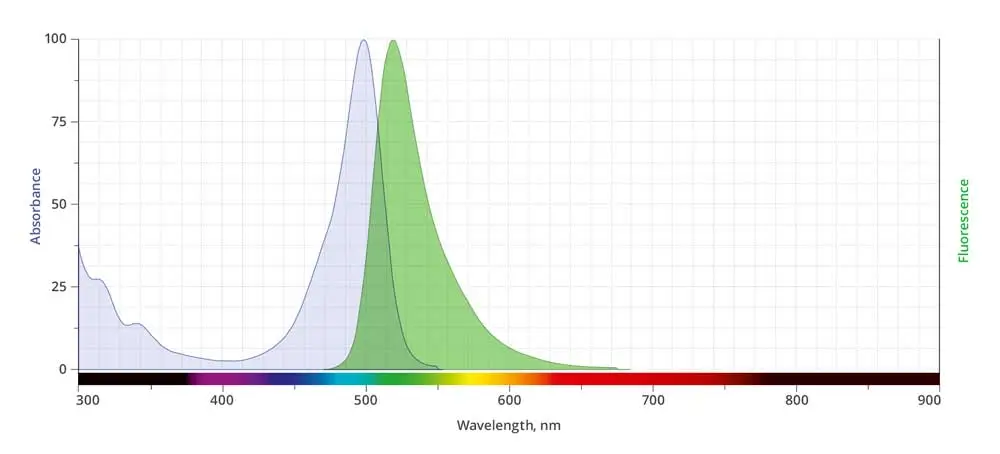
Excitation/Emission Maximum 494/517 nm | |
Shipping Conditions Ambient temperature | |
Shipping Instructions Ambient temperature |
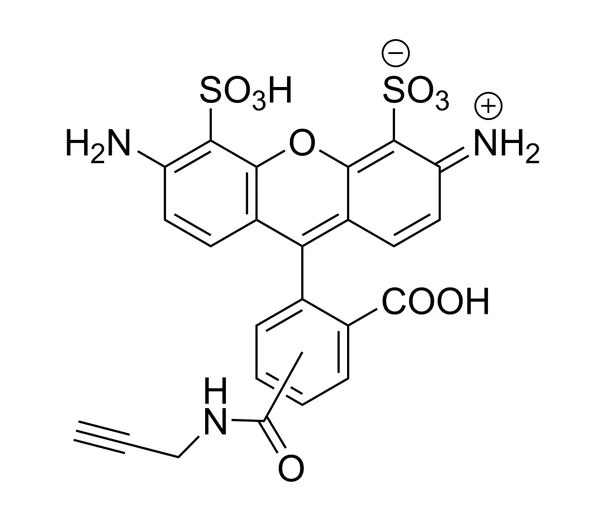
AZDye 488 Alkyne
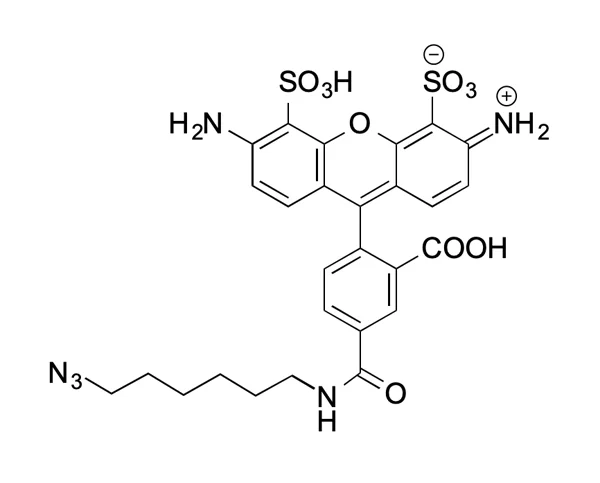
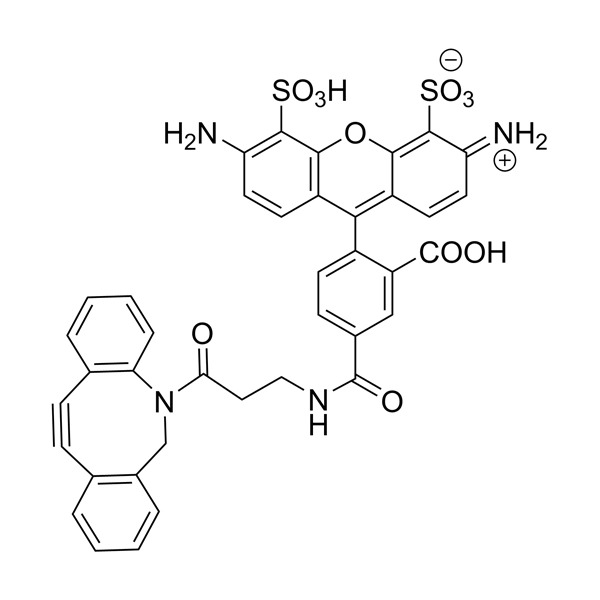
AZDye™ 488 Alkyne is a bright, green-fluorescent alkyne-activated probe routinely used for imaging of low abundance azide-containing biomolecules. AZDye™ 488 Alkyne reacts with azides via a copper-catalyzed click reaction (CuAAC) to form a stable triazole linker. A probe for copper-less azide detection (AZDye™ 488 DBCO) is also available for application where the presence of copper is not acceptable.
AZDye™ 488 is a bright, and highly photostable, green-fluorescent probe optimally excited by the 488 nm laser line. This probe is water-soluble and its fluorescence is pH independent over a wide pH range. The brightness and photostability of blue dyes are best suited to direct imaging of low-abundance targets. AZDye™ 488 is structurally identical to Alexa Fluor® 488 Alkyne. Its absorption/emission spectra is a perfect match to spectra of many other fluorescent dyes based on sulfonated rhodamine 110 core, including DyLight® 488, Alexa Fluor® 488 and CF® 488 Dye.
Alexa Fluor® and DyLight® are registered trademarks of Thermo Fisher Scientific.
Price range: $175.00 through $1,677.00
| SKU | Unit Size | Price |
|---|---|---|
Select a unit size:
How do I request a quote or bulk pricing?
Abs/Em Spectra
|
Selected References
|