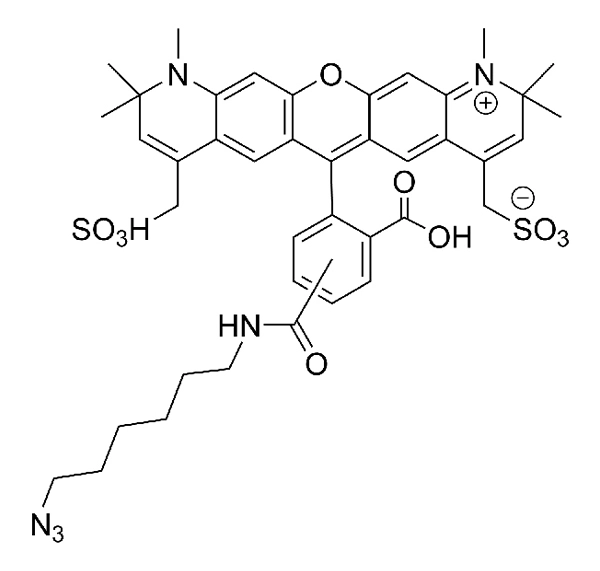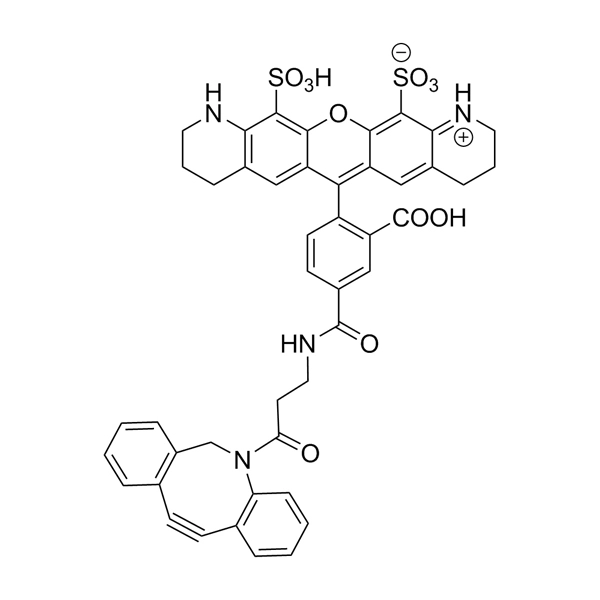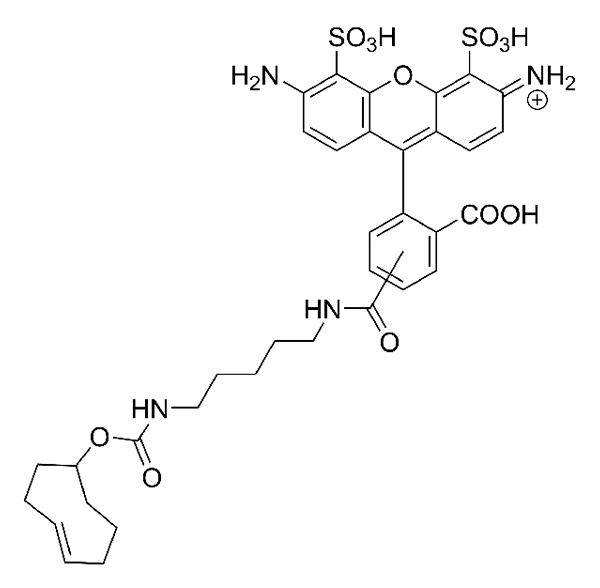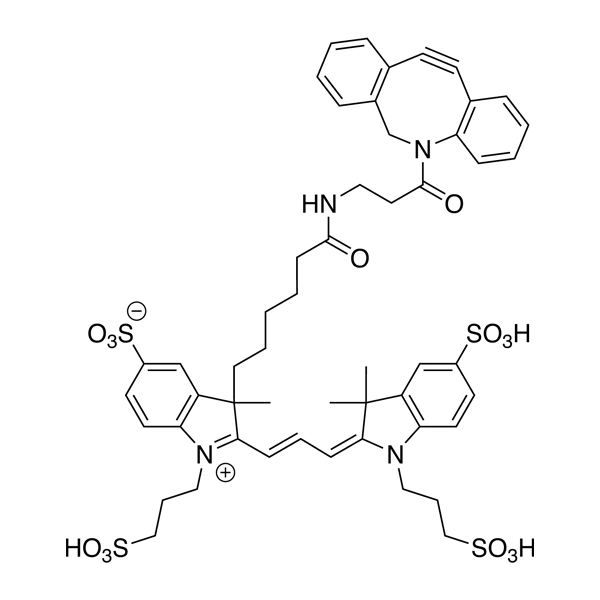
CAS Number N/A | |
Molecular Weight 946.08 (protonated) | |
Appearance Blue solid | |
Extinction Coefficient 92,000 | |
Purity >95% (HPLC) | |
Unit Size 1 mg, 5 mg, 25 mg | |
Solubility Water, DMSO, DMF | |
Storage Instructions -20°C. Desiccate | |
Spectrally Similar Dyes Alexa Fluor® 660, CF® 660R | |
Laser Line 633 or 635 nm | |
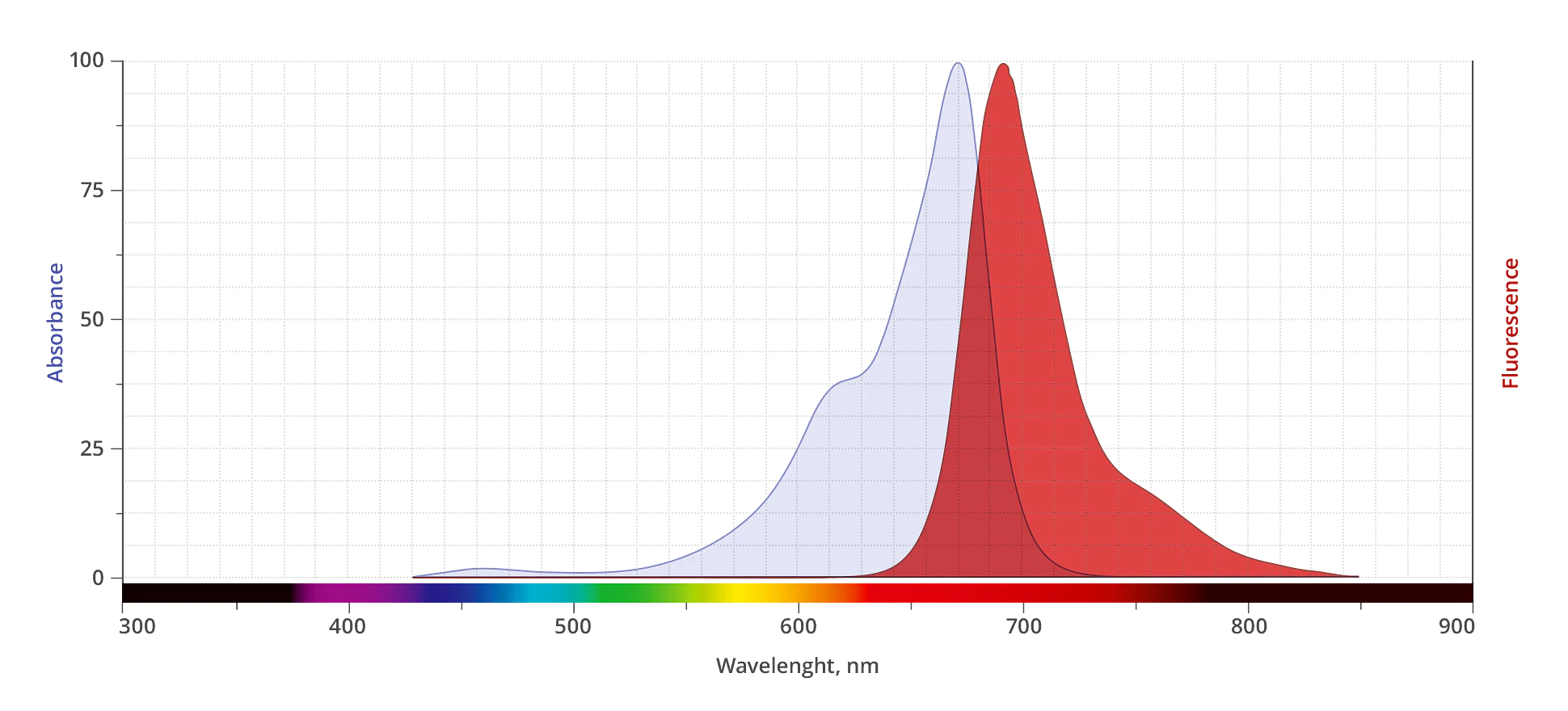
Excitation/Emission Maximum 665/690 nm | |
Shipping Conditions Ambient temperature | |
Shipping Instructions Ambient temperature |
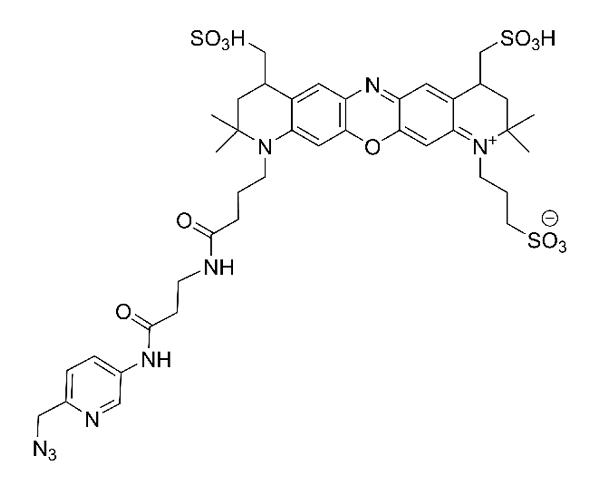
AZDye 660R Picolyl Azide
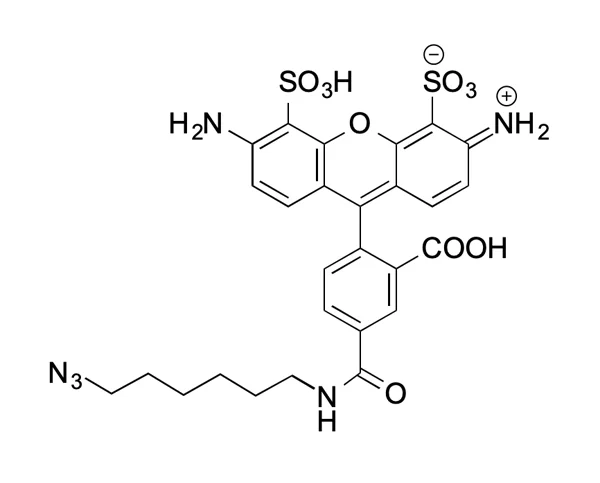
AZDye 660R Picolyl Azide is a bright and very photostable probe routinely used for imaging of alkyne-containing biomolecules. MB 660R Azide can be reacted with terminal alkynes via a copper-catalyzed click reaction (CuAAC). It also reacts with strained cyclooctyne via a copper-free “click chemistry” reaction to form a stable triazole and does not require Cu-catalyst or elevated temperatures. The brightness and photostability of this dye are best suited to direct imaging of low-abundance targets.
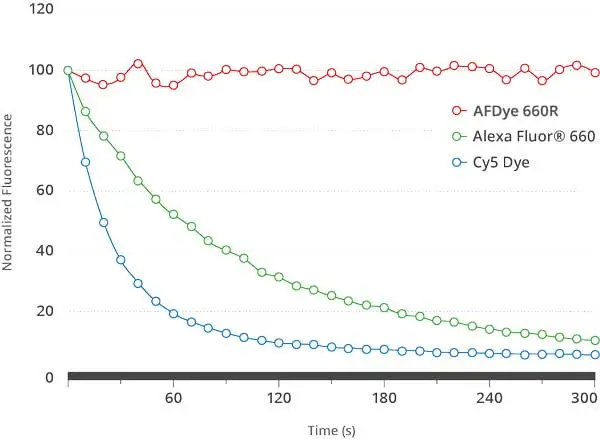
AZDye 660R is a bright and photostable far-red dye that emits fluorescence at about 685 nm in the borderline spectral region between far-red and near-IR. Although the absorption maximum is at around 665 nm, this dye can be sufficiently excited by the 633 or 635 nm laser. AZDye 660R dye is water soluble and pH-insensitive from pH 4 to pH 10. AZDye 660R is a rhodamine-based dye, and like rhodamine dyes in general, it is exceptionally photostable (Figure 1). The superior photostability and excellent brightness of AZDye 660R make the dye an ideal choice for confocal microscopy and other demanding applications.
Price range: $215.00 through $2,294.00
| SKU | Unit Size | Price |
|---|---|---|
Select a unit size:
How do I request a quote or bulk pricing?
Abs/Em Spectra
|
Selected References
|
Documents |