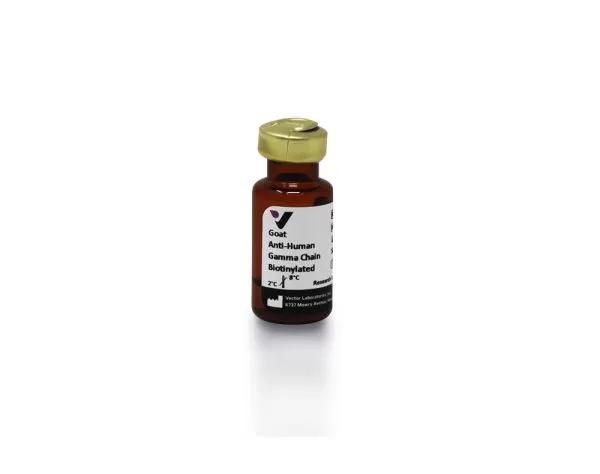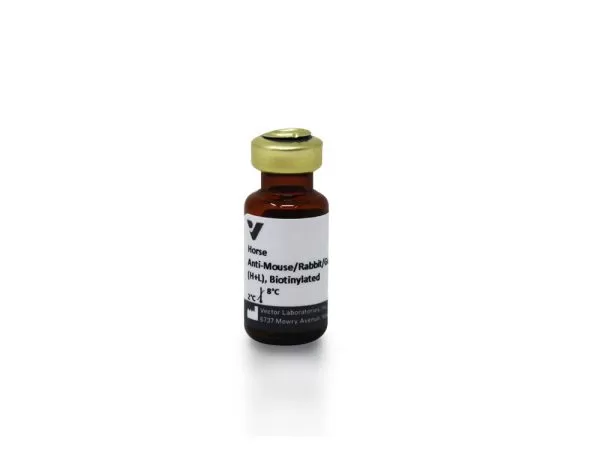
Format Ready-to-Use | |
Unit Size 55 ml | |
Storage Instructions 2-8 °C | |
Usage Summary Following incubation with primary antibody, wash specimens in buffer.Apply RTU Biotinylated Anti-Rat IgG and incubate for 30 minutes at room temperature.Wash in buffer for 5 minutes and follow with avidin- or streptavidin-based detection reagent such as RTU VECTASTAIN®Elite® ABC Reagent (PK-7100). * 10mM sodium phosphate, pH 7.8, 0.15M NaCl. | |
Applications Immunohistochemistry / Immunocytochemistry, Immunofluorescence, In situ hybridization, Blotting Applications, Elispot, ELISAs | |
Target Species Rat | |
Concentration Ready-to-use solution of biotinylated goat anti-rat IgG in PBS* containing carrier protein and 0.08% sodium azide as preservative. | |
Conjugate Biotinylated | |
Reactive Species Goat | |
Source Species Rat | |
Host Species Goat |
-
This product has been discontinued.
Please consider the following as potential substitutes: BA-9400-1.5. Goat Anti-Rat IgG Antibody (H+L), Biotinylated. Or contact Technical Support @ [email protected] for assistance in finding alternative.
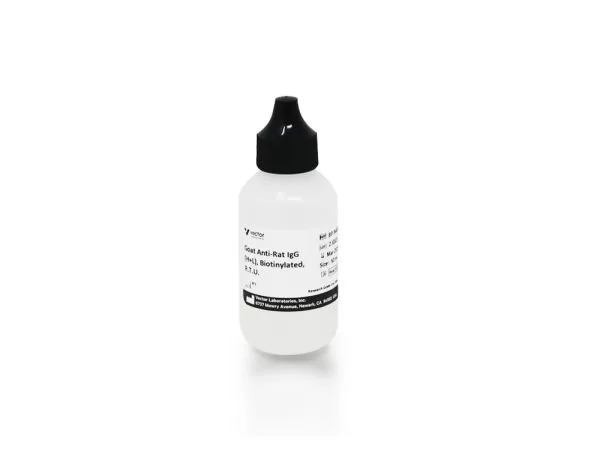
Goat Anti-Rat IgG Antibody (H+L), Biotinylated
R.T.U. Biotinylated Goat Anti-Rat IgG Antibody is used in an avidin-biotin or streptavidin-biotin detection system. These antibodies can be used for tissue and cell staining, ELISAs, and blots.
Features:
• Thoroughly adsorbed against serum and immunoglobulins from potentially interfering species. (For mouse tissue applications, please see anti-rat, mouse adsorbed, secondary antibodies.)
• Recognizes both heavy and light chains (H+L)
• Supplied in a convenient ready-to-use prediluted, stabilized solution
$179.00
| SKU | Unit Size | Price |
|---|---|---|
Select a unit size:
How do I request a quote or bulk pricing?
Technical Information Vector Laboratories affinity-purified antibodies are of unmatched quality. These antibodies are prepared using proprietary immunization schedules that produce high affinity antibodies. The antibodies are then purified by affinity chromatography, and cross-reactivities that are likely to interfere with specific labeling are removed by solid phase adsorption techniques. The biotinylated secondary antibodies are conjugated to ensure the maximum degree of labeling without compromising the specificity or affinity of the antibody. These antibody solutions are provided in convenient dropper bottle format for ease of use. |
 Powered by Bioz © 2023