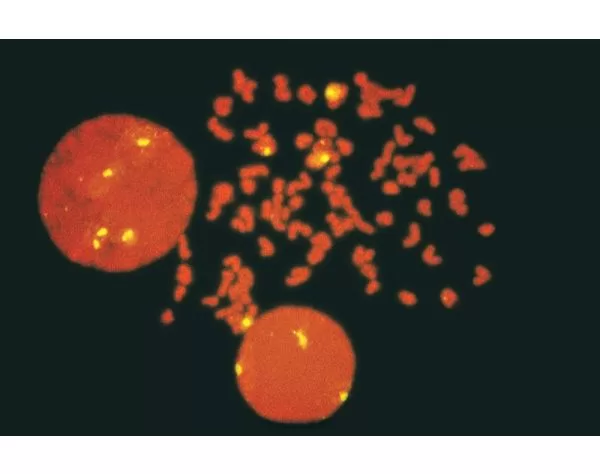
Color of Fluorescence Green | |
Format Concentrate | |
Formulation 10 mM HEPES, pH 7.5, 0.15 M NaCl, 0.08% sodium azide | |
Unit Size 0.5 mg | |
Storage Instructions 2-8 °C | |
Usage Summary The recommended concentration range for use is 5-20 µg/ml. | |
Applications Immunofluorescence, In situ hybridization | |
Concentration 1 mg active conjugate/ml | |
Conjugate DyLight 488 | |
Reactive Species Goat | |
Host Species Goat |
-
This product has been discontinued.
Suggestion: Switch to two-step detection system using unlabeled Anti-Streptavidin followed by a Dylight 488 Anti-Goat IgG:
SP-4000-1, Anti-Streptavidin Antibody, Unconjugated.
DI-3088-1.5, Horse Anti-Goat IgG Antibody (H+L), DyLight™ 488.
Or contact Technical Support @ [email protected] for assistance in finding alternative.
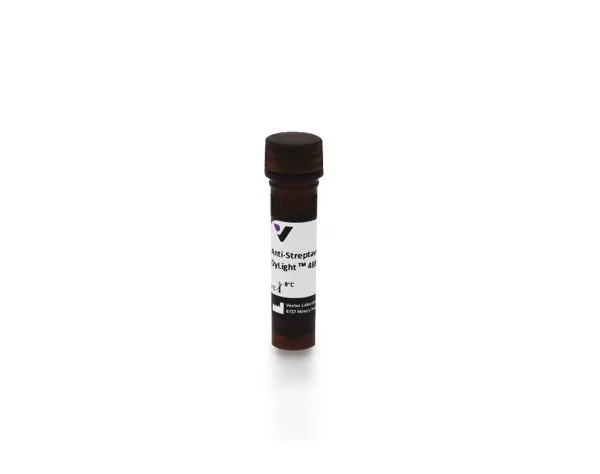
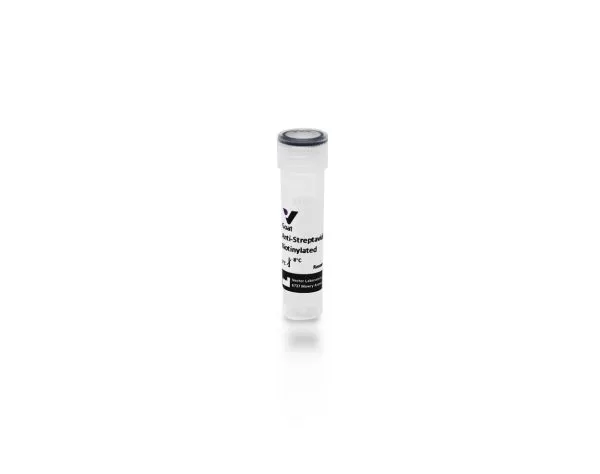
Anti-Streptavidin
Anti-Streptavidin antibodies have been widely used as amplifying reagents in immunohistochemistry, in situ hybridization, microarray assays, ELISAs, blots, and many other applications. Our antibodies to streptavidin are produced in goats using our highly purified streptavidin and isolated by affinity chromatography. Anti-Streptavidin does not bind avidin and Anti-Avidin does not recognize streptavidin. These antibodies provide opportunities to significantly amplify signals in many applications.
DyLight 488 Anti-Streptavidin has been optimally labeled to provide maximum fluorescence.
• Maximum Excitation: 493 nm
• Maximum Emission: 518 nm
• Color: green
$184.00
| SKU | Unit Size | Price |
|---|---|---|
Select a unit size:
How do I request a quote or bulk pricing?
Technical Information The capability of binding avidin or streptavidin via either biotin binding sites or through antigen binding sites, makes these biotinylated antibodies unique. These antibodies can be used either as part of preformed complexes or in sequence to amplify fluorescent signals. When used in sequence, the target is first labeled with fluorochrome-conjugated avidin or streptavidin, followed by incubation with Biotinylated Anti-Avidin or Biotinylated Anti-Streptavidin, followed by a second layer of fluorochrome-conjugated avidin or streptavidin. This sequence can be repeated. This multi-layered approach introduces more fluorochromes at the target site and can provide a multi-fold amplification over a single layer. |
 Powered by Bioz © 2023