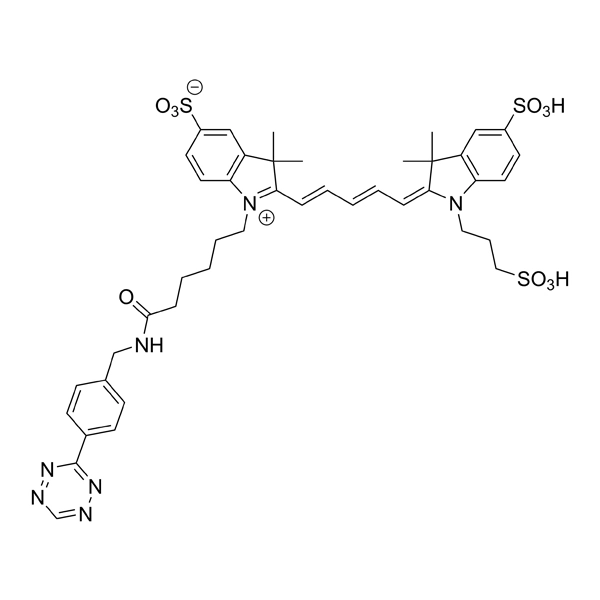
CAS Number 1564286-24-3 | |
Molecular Weight 1211.6 | |
Molecular Formula C64H86N6O11S3 | |
Appearance Blue solid | |
Chemical Formula C64H86N6O11S3 | |
Extinction Coefficient 250,000 | |
Purity >95% (HPLC) | |
Unit Size 1 mg, 5 mg, 25 mg, 100 mg | |
Solubility Water, DMSO, DMF | |
Storage Instructions -20°C. Desiccate | |
Spectrally Similar Dyes Alexa Fluor® 647, CF™ 647 Dye, DyLight™649 | |
Laser Line 633 or 635 nm | |
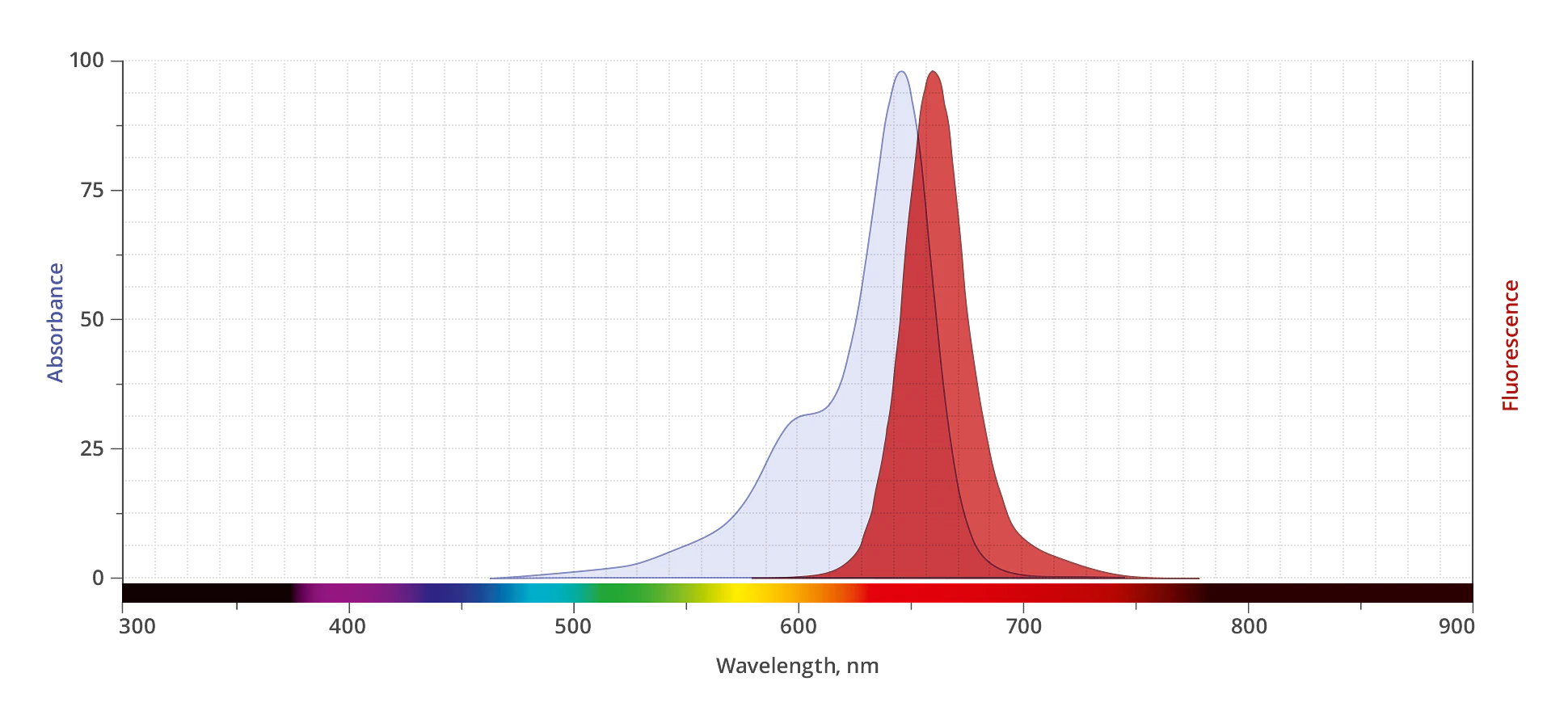
Excitation/Emission Maximum 649 nm / 666 nm | |
Shipping Conditions Ambient temperature | |
Shipping Instructions Ambient temperature |
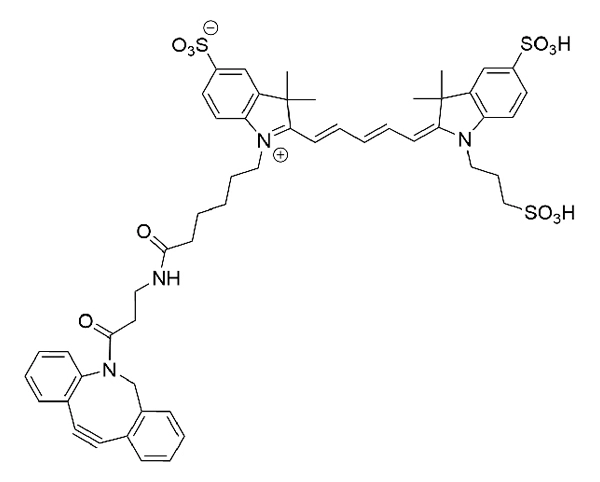
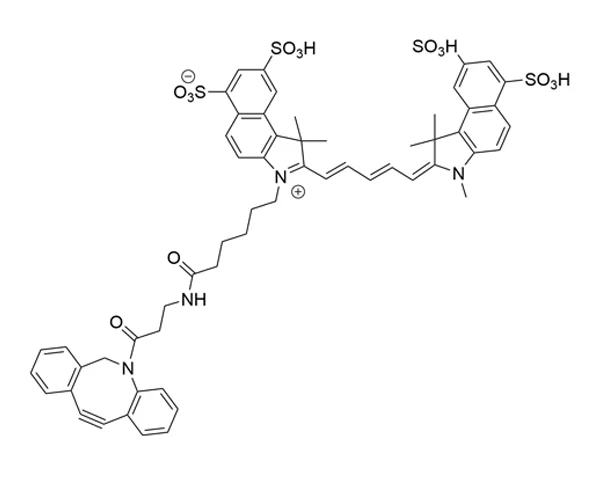
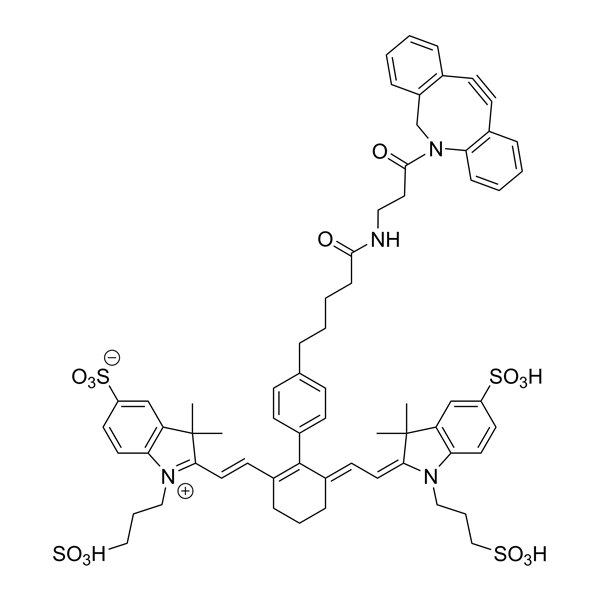
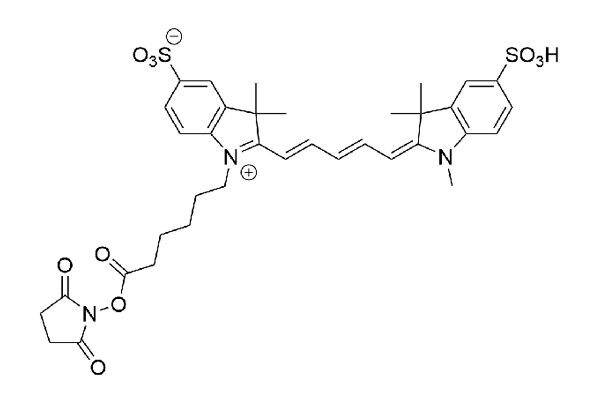
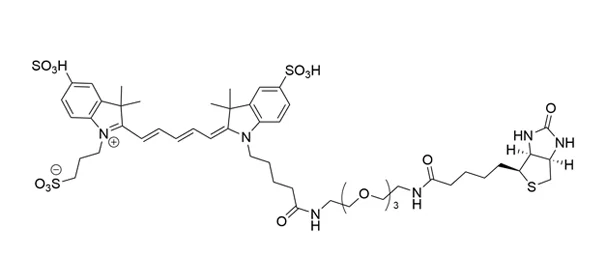
Cy5 DBCO
Cy5 DBCO is an azide reactive probe used for imaging azide-tagged biomolecules via a copper-free “click reaction”. DBCO moiety reacts with azides to form a stable triazole and does not require Cu-catalyst or elevated temperatures. This far-red fluorescent probe is water-soluble, and its fluorescence is pH-insensitive from pH 4 to pH 10. Its excitation peak is ideally suited for the 633 nm or 647 nm laser lines and its absorption and emission spectra are almost identical to those of Alexa Fluor® 647, CF® 647 Dye, or any other Cyanine5 based fluorescent dyes.
Price range: $153.00 through $3,223.00
| SKU | Unit Size | Price |
|---|---|---|
Select a unit size:
How do I request a quote or bulk pricing?
Abs/Em Spectra
|
Selected References
|