CAS Number N/A | |
Molecular Weight 467.52 | |
Appearance Dark red amorphous solid | |
Extinction Coefficient 89,000 | |
Purity >95% (HPLC) | |
Unit Size 1 mg, 5 mg, 25 mg, 100 mg | |
Solubility DMSO, DMF | |
Storage Instructions -20°C. Desiccate | |
Spectrally Similar Dyes Alexa Fluor® 546, Atto™ 543, CF® 543 Dye | |
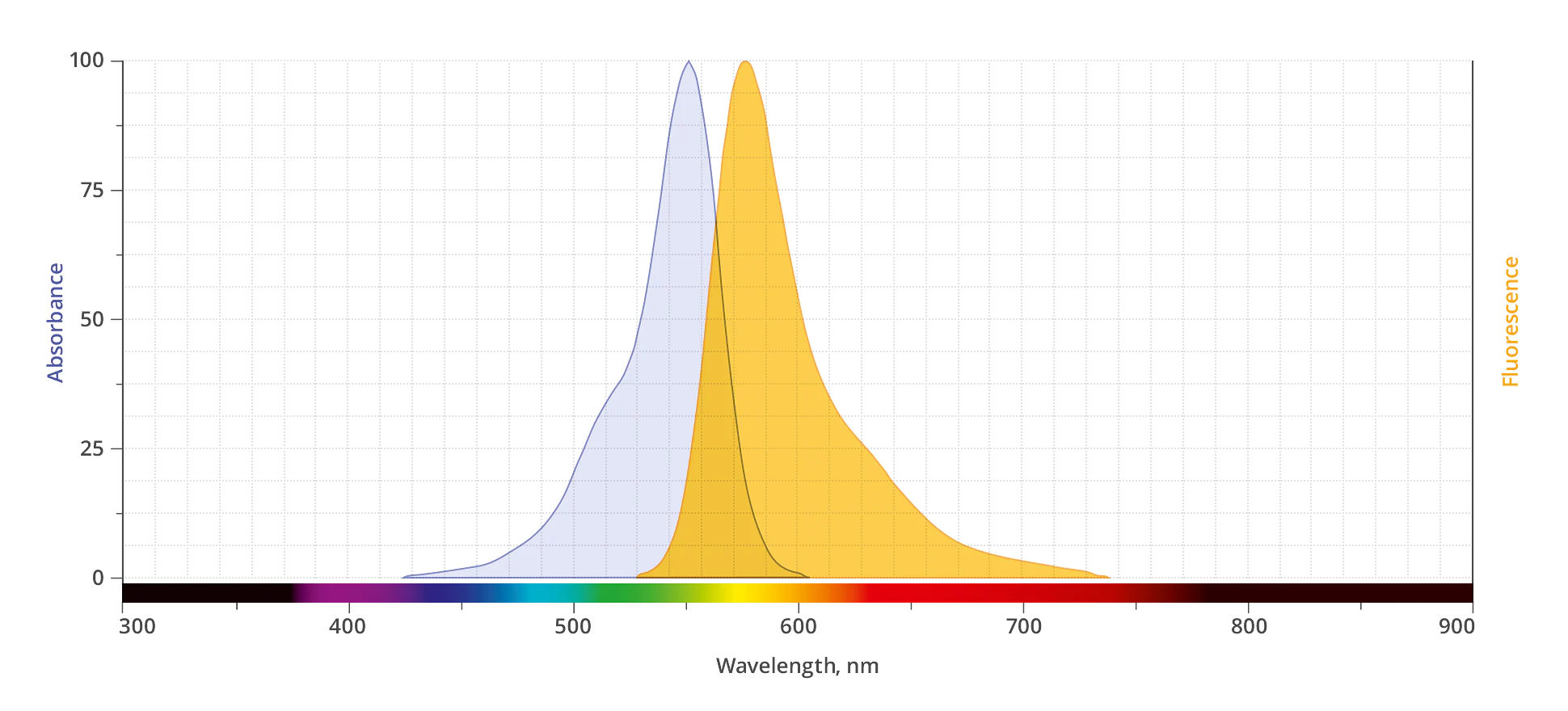
Excitation/Emission Maximum 553/575 nm | |
Shipping Conditions Ambient temperature | |
Shipping Instructions Ambient temperature |
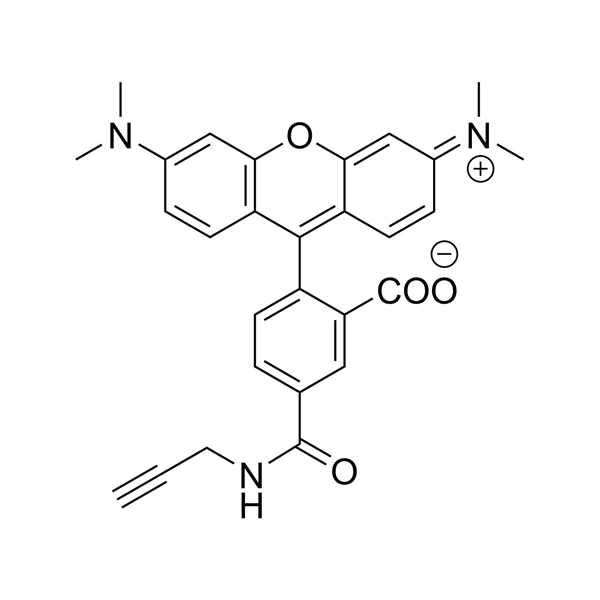
5-TAMRA Alkyne
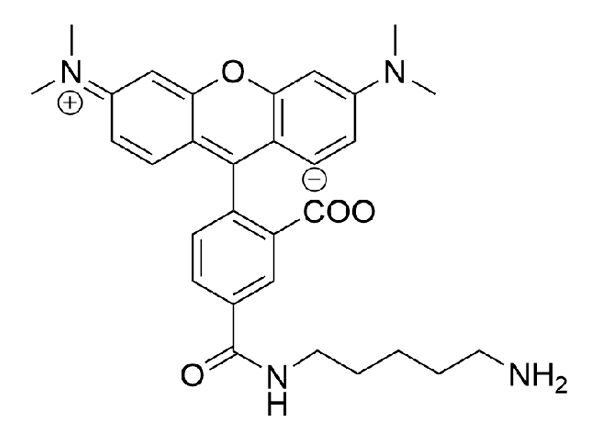
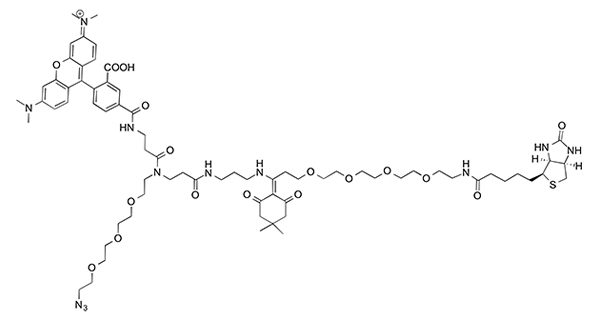
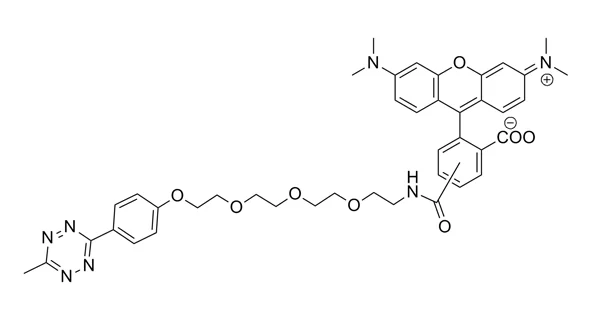
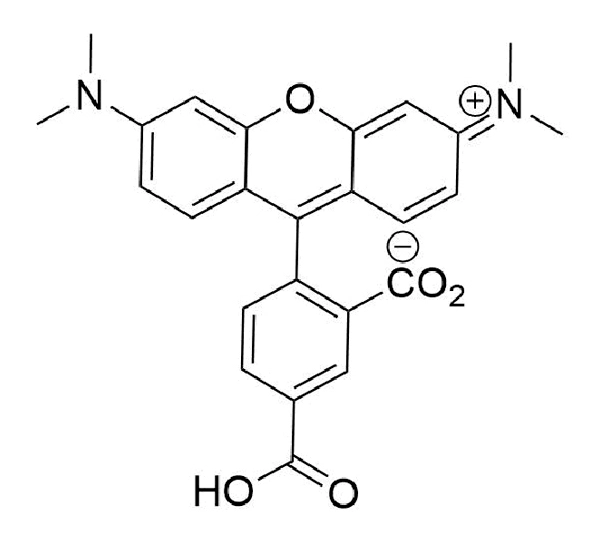
5-TAMRA Alkyne (also known as TAMRA Alkyne, isomer 5) is the red-fluorescent probe that is compatible with various excitation sources including mercury arc, tungsten and xenon arc lamps, the 544 nm line of the Helium-Neon laser and the 532 nm green laser line. It is predominantly used for detection of terminal alkyne-tagged biomolecules via a copper-catalyzed click reaction (CUAAC). It also reacts with strained cyclooctyne via a copper-free “click chemistry” reaction to form a stable triazole and does not require Cu-catalyst or elevated temperatures.
Although the mixed isomers of 5(6)-TAMRA Alkyne is a preferred, routinely used red fluorescent dye for staining proteins, labeling peptides and nucleotides with TAMRA mixed isomers might be troublesome due to significant signal broadening in HPLC purification. Peptides and nucleotides labeled with a single isomer TAMRA usually give better resolution in HPLC purification that is often required in the conjugation processes.
5-TAMRA Alkyne is structurally identical to Tetramethylrhodamine (TAMRA) Alkyne (5-Carboxytetramethylrhodamine, Propargylamide), 5-isomer ,Catalog number: T10183.
Price range: $84.00 through $869.00
| SKU | Unit Size | Price |
|---|---|---|
Select a unit size:
How do I request a quote or bulk pricing?
Abs/Em Spectra
|
Selected References
|