Glycans and Immune Checkpoints: Revealing Hidden Influences on Cancer Immunotherapy
Immune checkpoint therapy describes a class of antibody therapeutics for the treatment of cancer that target proteins that modulate immune responses. More than a dozen approved therapeutics target immune checkpoint proteins like PD-1, PD-L1, and CTLA-4 [1]. These therapies show success in a variety of cancer types and have revolutionized cancer immunotherapy by ramping up immune response, often through immune checkpoint inhibition, in tumor microenvironments. However, glycosylation, a ubiquitous post-translational modification in which a glycan is attached to a protein, impacts immunotherapy efficacy and should be considered in the development of therapeutic strategies and in assessing patients for immunotherapy.
PD-L1 blockade using anti-PD-L1 antibodies is a therapeutic mechanism that increases immune cell activity in immunogenically “cold” environments. However, heavy glycosylation (particularly N-glycosylation) of PD-L1 can block anti-PD-L1 antibodies from binding to the target antigen, giving false negative immunohistochemistry, ELISA, and other immunodetection signals. This can impede clinical evaluation of how effective immunotherapy will be for cancer patients. Deglycosylation has been found to increase PD-L1 signal in patient-derived cancer tissues and predict anti-PD-L1 antibody therapeutic efficacy [2]. This further supports the growing need to consider protein glycosylation in disease progression, diagnostic strategies, and therapeutic options.
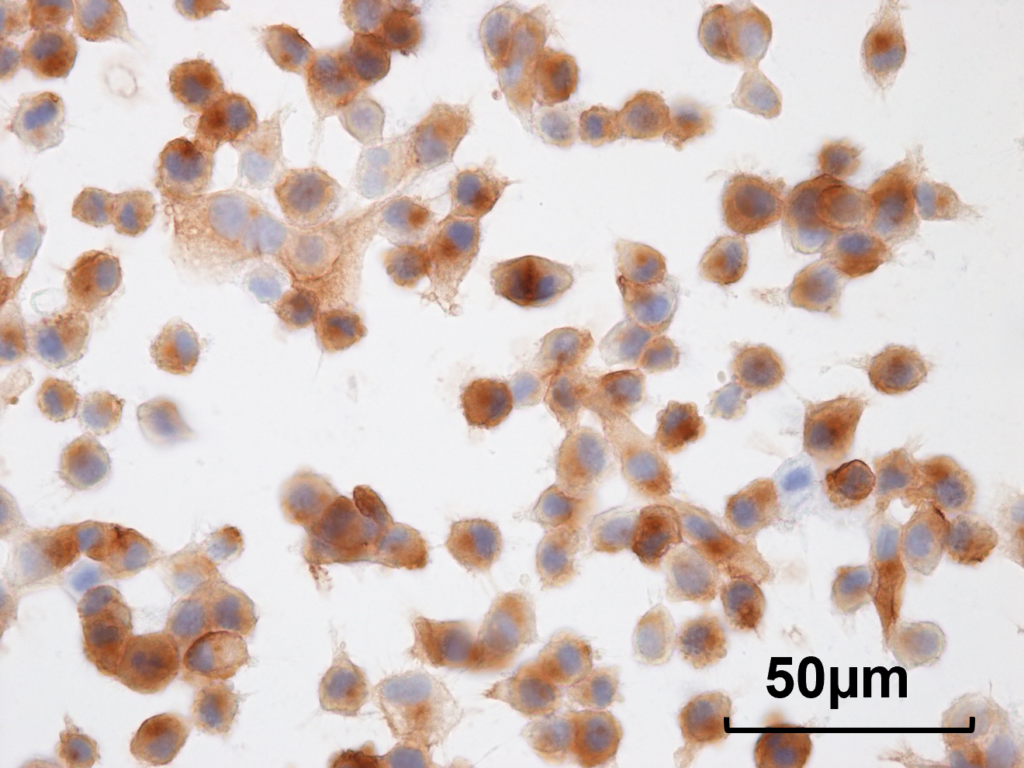
As glycobiology experts, Vector Laboratories has developed several tools to bring glycosylation into focus for researchers exploring areas like cancer immunotherapy. The Glysite™ Explorer in situ PLA Glycan Detection Kit is a novel kit that combines curated lectins and trusted in situ Proximity Ligation Assay (isPLA) technology in one integrated kit for the visualization of protein-glycan proximity. This data can provide orthogonal validation of glycan-mediated targets and provide a spatial look at protein glycosylation in FFPE tissues and cells. Dr. Steven Barthel and Dr. Tobias Schatton, co-directors of the Program of Glyco-Immunology and Oncology (PGIO) at Brigham and Women’s Hospital, Harvard Medical School, use the Glysite Explorer Kit to explore the proximity of glycans to immune checkpoint proteins in melanoma cells and a variety of immune cell subsets (Figure 1). This data will add to the growing understanding of the impact of glycosylation on the tumor microenvironment and cancer progression.
For targets with unknown glycosylation patterns, Glysite™ Scout Glycan Screening Kits provides a diverse panel of lectins ideal for preliminary screening of tissue samples, with specificity to mannose, complex N-glycan, core O-glycan, fucose, sialic acid, sulfation, GlcNAc, chitin, galactose, and LacNAc. Glysite Scout kits can be used to probe glycosylation changes and patterns in cancer tissues—see our poster “A New Journey for Cancer Research Glysite™ Scout Glycan Screening Kit for Comprehensive Detection of Glycan Expression” for more information. Additionally, we carry a wide range of lectins, including NCFG-validated tools, with a variety of conjugations for experimental flexibility.
Absolute Antibody, a Vector Laboratories company, is a premier producer and provider of recombinant antibodies, including antibodies for cancer research like research-grade biosimilars to therapeutics. These are ideal for cancer research as they are highly pure and identical to immunotherapy antibodies without the need for sourcing costly therapeutics-grade biosimilars.
Immune checkpoint therapy remains a powerful tool for the treatment of cancer, and to expand therapeutic avenues, protein glycosylation must be considered. With tools like the Glysite Explorer and Glysite Scout kits, lectins, and recombinant antibodies, Vector Laboratories makes accessible the reagents researchers need to explore cancer immunotherapy through a comprehensive lens.
Read the following articles for more information on how studying protein glycosylation unlocks avenues of understanding, and how the right tools make that possible:
- The Overlooked PTM: Making Glycosylation More Accessible to Researchers
- Revisiting Colon Cancer Metastasis Through a Glycobiology Lens
- Glycosylation in the Alzheimer’s Brain: Visualizing New Paths to Diagnosis and Therapy
- Advancing Colorectal Cancer Research with Biomarker-Driven Tools
- A New Focus for Breast Cancer: Protein Glycosylation’s Emerging Role
- Congenital Disorders of Glycosylation: Advancing Diagnostics and Therapeutics Through Glycobiology
References
- The Antibody Society. (n.d.). Therapeutic monoclonal antibodies approved or in review in the EU or US. https://www.antibodysociety.org/resources/approved-antibodies/
- Lee, H. H., Wang, Y. N., Xia, W., Chen, C. H., Rau, K. M., Ye, L., Wei, Y., Chou, C. K., Wang, S. C., Yan, M., Tu, C. Y., Hsia, T. C., Chiang, S. F., Chao, K. S. C., Wistuba, I. I., Hsu, J. L., Hortobagyi, G. N., & Hung, M. C. (2019). Removal of N-Linked Glycosylation Enhances PD-L1 Detection and Predicts Anti-PD-1/PD-L1 Therapeutic Efficacy. Cancer cell, 36(2), 168–178.e4. https://doi.org/10.1016/j.ccell.2019.06.008