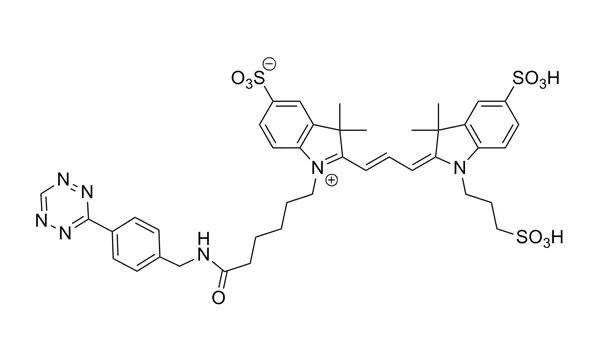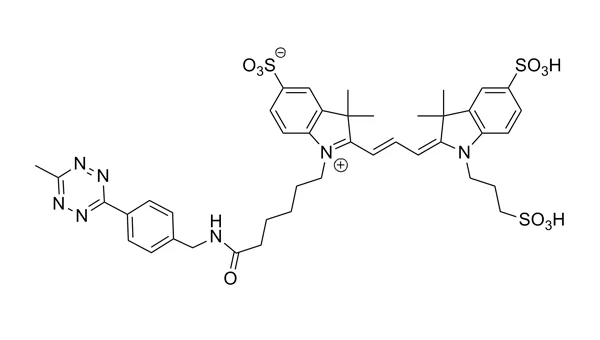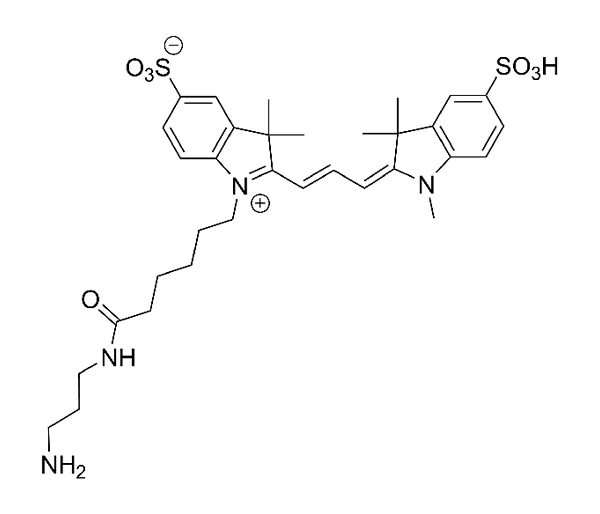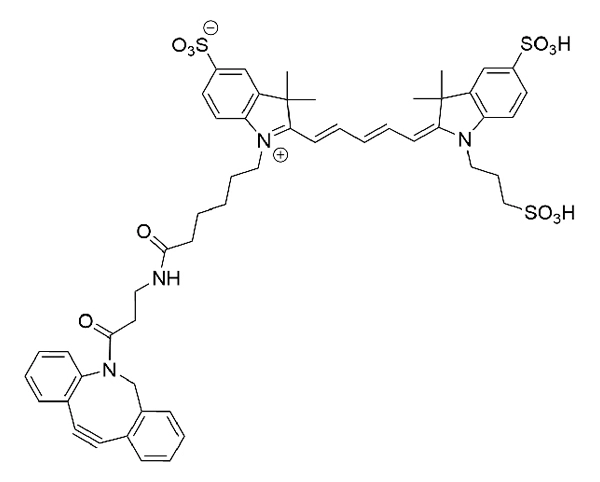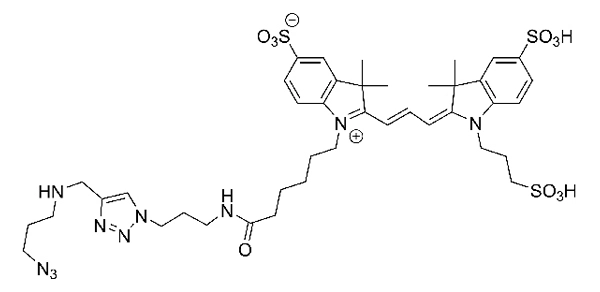
CAS Number N/A | |
Molecular Weight 927.08 (protonated) | |
Appearance Red solid | |
Extinction Coefficient 155,000 | |
Purity >95% (HPLC) | |
Unit Size 1 mg, 5 mg, 25 mg | |
Solubility Water, DMSO, DMF | |
Storage Instructions -20°C. Desiccate | |
Spectrally Similar Dyes Alexa Fluor® 555, CF® 555, DyLight® 549, Cy3 Dye | |
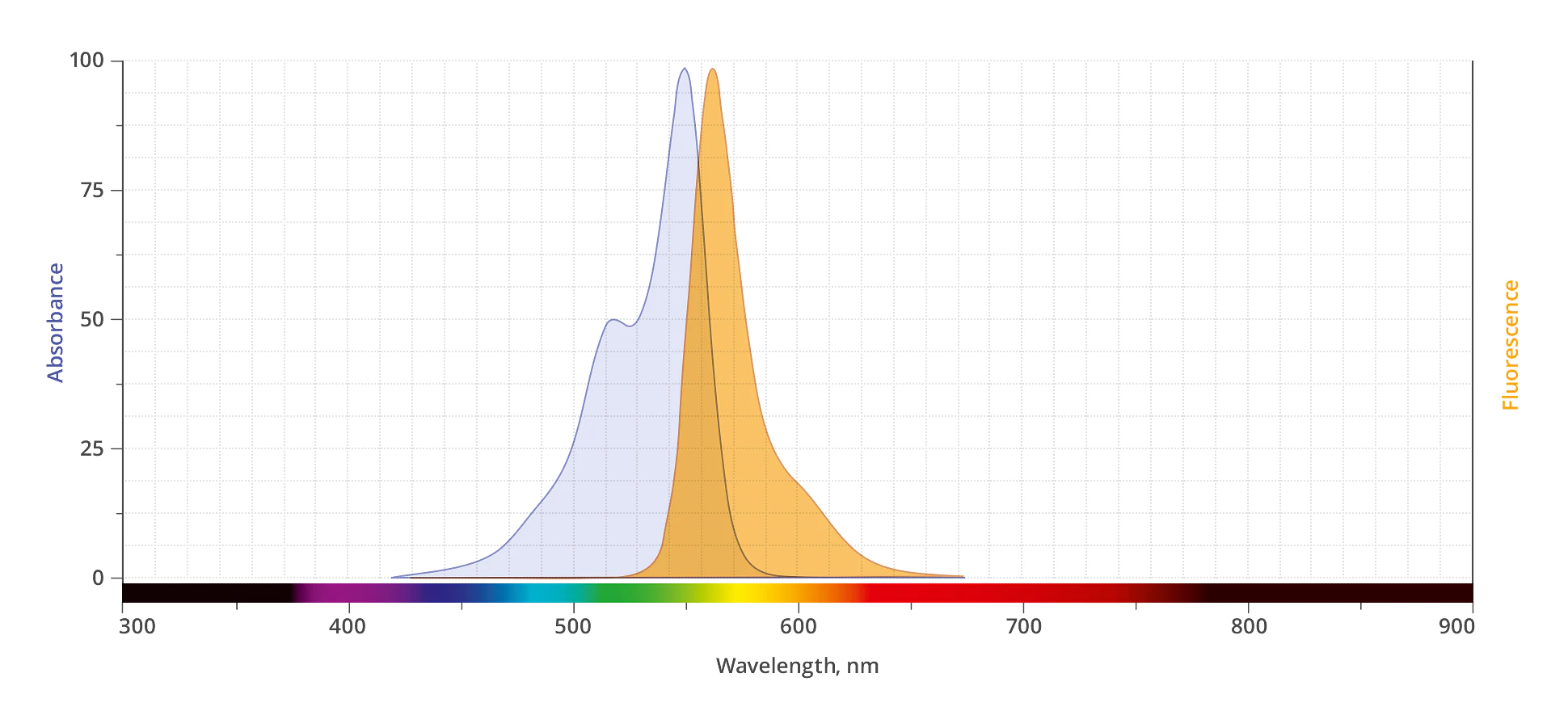
Laser Line 532 nm or 555 nm | |
Excitation/Emission Maximum 555/572 nm | |
Shipping Conditions Ambient temperature | |
Shipping Instructions Ambient temperature |
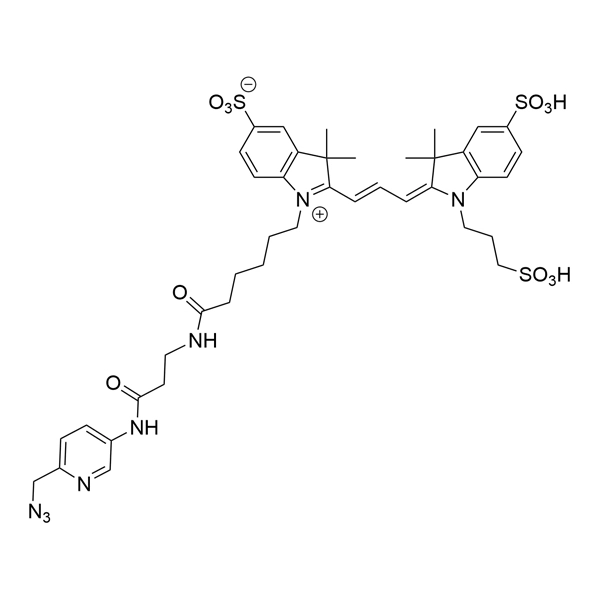
Cy3 Picolyl Azide
Cy3 Picolyl Azide is an advanced fluorescent probe that incorporates a copper-chelating motif to raise the effective concentration of Cu(I) at the reaction site to boost the efficiency of the CuAAC reaction, resulting in a faster and more biocompatible CuAAC labeling. Up to 40-fold increase of signal intensity, compared to conventional azides, was reported (see Selected References).
In addition, the use picolyl azides instead of conventional azides allows for at least a tenfold reduction in the concentration of the copper catalyst without sacrificing the efficiency of labeling, significantly improving biocompatibility of CuAAC labeling protocol.
In summary, the introduction of a copper-chelating motif into azide probe leads to a substantial increase in the sensitivity and reduced cell toxicity of CuAAC detection alkyne-tagged biomolecules. This will be of special value for the detection of low abundance targets or living system imaging.
Cy3 Picolyl Azide is a water-soluble, bright orange-fluorescent dye with excitation ideally suited for the 532 nm or 555 nm laser lines and visualized with TRITC (tetramethylrhodamine) filter sets. Cy3 dye is structurally similar, and spectrally is almost identical to Alexa Fluor® 555, CF® 555 Dye, or any other Cyanine3 based fluorescent dyes.
Price range: $198.00 through $1,737.00
| SKU | Unit Size | Price |
|---|---|---|
Select a unit size:
How do I request a quote or bulk pricing?
Abs/Em Spectra
|
Selected References
|
Documents |