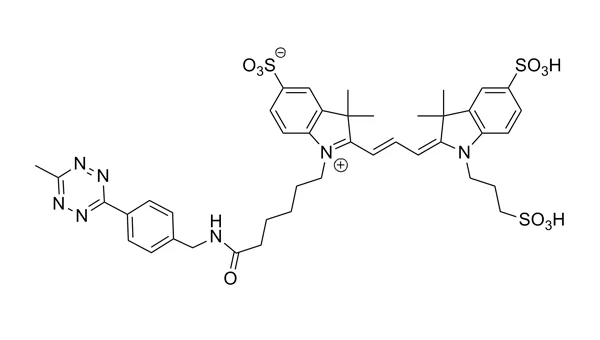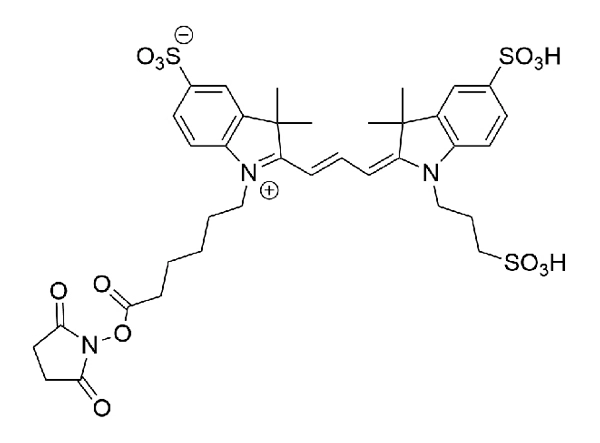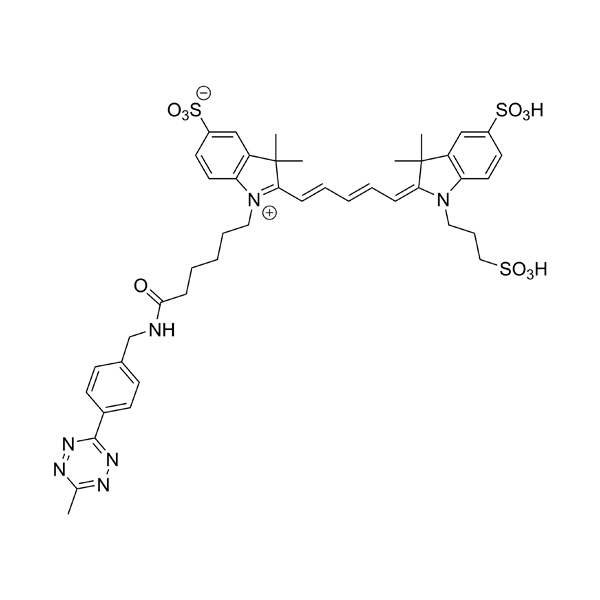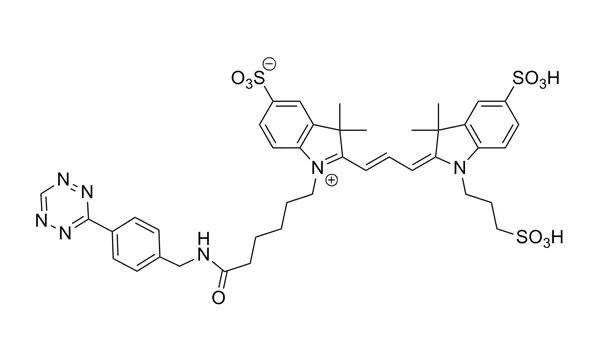
CAS Number 1782950-79-1 | |
Molecular Weight 983.18 | |
Appearance Red solid | |
Extinction Coefficient 150,000 | |
Purity >95% (HPLC) | |
Unit Size 1 mg, 5 mg, 25 mg, 100 mg | |
Solubility Water, DMSO, DMF | |
Storage Instructions -20°C. Desiccate | |
Spectrally Similar Dyes Alexa Fluor® 555, Atto™ 555, CF® 555 Dye, DyLight®549 | |
Laser Line 532, 555 or 568 nm | |
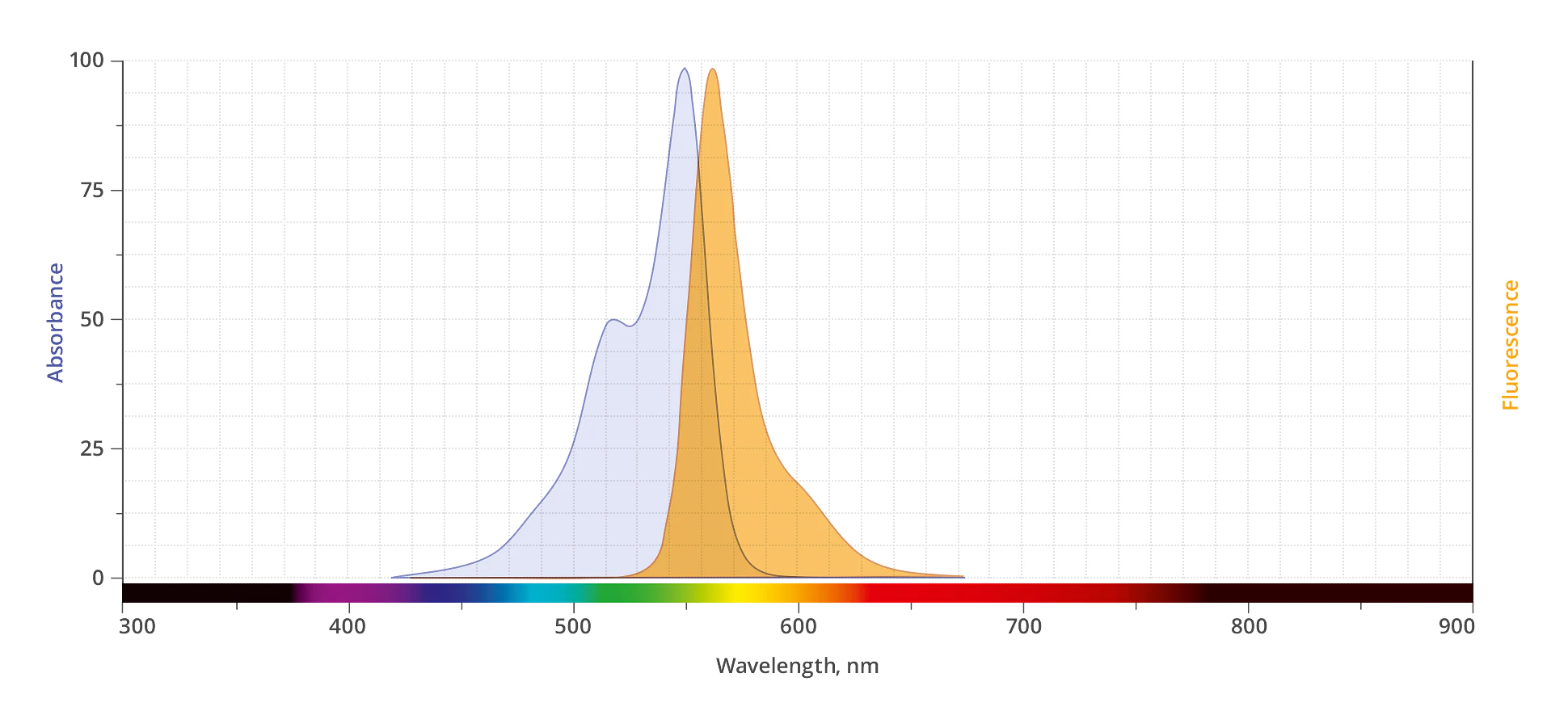
Excitation/Emission Maximum 553/569 nm | |
Shipping Conditions Ambient temperature | |
Shipping Instructions Ambient temperature |
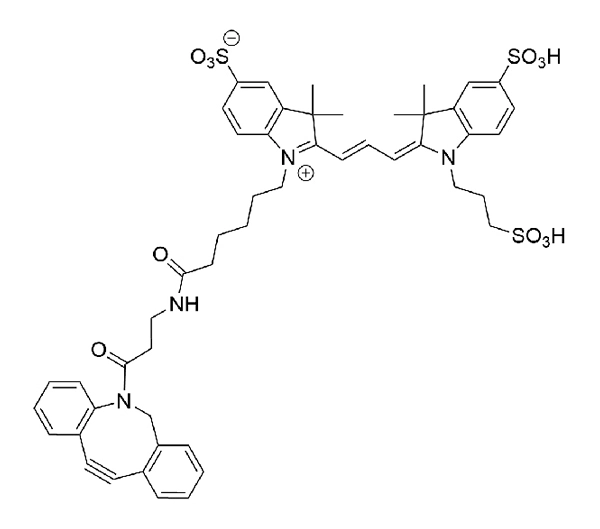
Cy3 DBCO
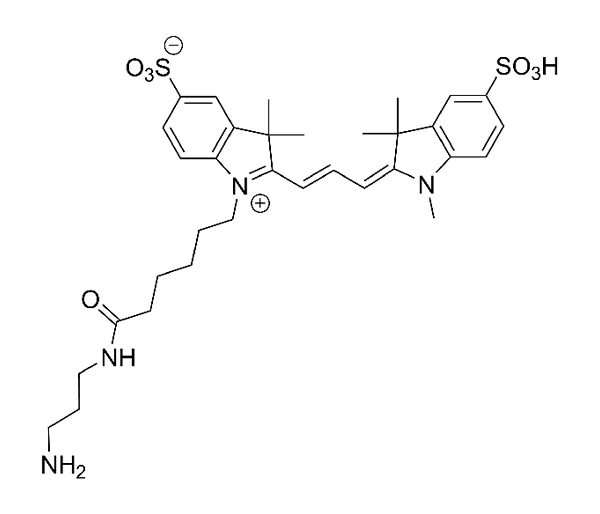
Cy3 DBCO is a bright, far-red-fluorescent, probe routinely used for imaging of azide-containing biomolecules without the need for copper catalyst. Cy3 DBCO reacts with azides via a copper-free “click chemistry” reaction to form a stable triazole and does not require Cu-catalyst or elevated temperatures. In application where the presence of copper is a concern Cy3 DBCO is an ideal alternative to copper requiring fluorescent alkynes.
Cy3 is a bright, water-soluble, and pH insensitive orange-fluorescent dye that can be excited using the 532 nm or 555 nm laser line and visualized with TRITC (tetramethylrhodamine) filter sets. Its absorption and emission spactra are almost identical to those of Alexa Fluor® 555, CF® 555 Dye, or any other Cyanine5 based fluorescent dyes.
Cy®3 DBCO reagent is not suitable for staining intracellular components of fixed and permeabilized cells due to high backgrounds.
This is sulfonated dye is also known as sulfo-Cyanine3.
Price range: $153.00 through $3,223.00
| SKU | Unit Size | Price |
|---|---|---|
Select a unit size:
How do I request a quote or bulk pricing?
Abs/Em Spectra
|
Selected References
|