Molecular Weight 120 | |
Extinction Coefficient 1.17 | |
Formulation 10 mM sodium phosphate, 0.15 M NaCl, pH 7.5, 0.08% sodium azide, 5 mM lactose | |
Inhibiting or Eluting Sugar Lactose | |
Unit Size 1 mg | |
Storage Instructions 2-8 °C; DO NOT FREEZE | |
Sugar Specificity Terminal type 2 LacNAc | |
Usage Summary For most applications we recommend a freshly prepared working solution of 5-20 µg/ml in the below buffer. | |
Applications Immunohistochemistry / Immunocytochemistry, Immunofluorescence, Blotting Applications, Elispot, ELISAs | |
Concentration 5 mg active conjugate/ml | |
Conjugate Biotinylated |
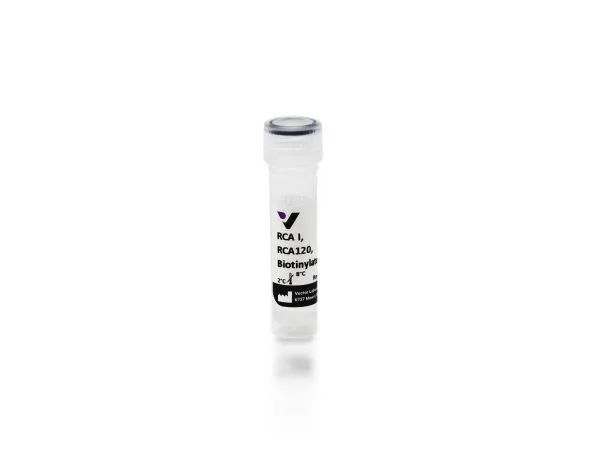
RCA120, Biotinylated
This lectin consists of two subunits of 60 kDa which can be dissociated by reducing agents into closely related chains between 27 kDa and 33 kDa. One of the chains appears to be common to the “B” chain of another castor bean lectin, ricin, while the other chain is unique to RCA I. The B chain binds to galactose or N-acetylgalactosamine residues of membrane glycoconjugates.
Biotinylated RCA I has an appropriate number of biotins bound to provide the optimum staining characteristics for this lectin. This conjugate is supplied essentially free of unconjugated biotins and is preserved with sodium azide.
$114.00
| SKU | Unit Size | Price |
|---|---|---|
Select a unit size:
How do I request a quote or bulk pricing?
Technical Information This biotinylated lectin is an ideal intermediate for examining glycoconjugates using the Biotin-Avidin/Streptavidin System. First the biotinylated lectin is added, followed by the VECTASTAIN ABC Reagent, Avidin D conjugate, or streptavidin derivative. Inhibiting/Eluting Sugar: 200 mM galactose or lactose |
 Powered by Bioz © 2023
Product FAQs
I recently purchased a biotinylated lectin. The datasheet supplied with the lectin suggests including 0.1 mM Ca++as part of the recommended buffer to prepare a working solution. What should I specifically add, and why is this required?
From our experience we have found that some lectins require Ca++ to be present for optimal binding activity. We suggest using calcium chloride (CaCl2) to fortify working solutions and ensure a minimum level of Ca++ is met. This may be particularly pertinent if using phosphate based buffers as diluents and storage solutions.