CAS Number 1255942-07-4 | |
Molecular Weight 749.92 | |
Appearance White to grey amorphous solid | |
Chemical Formula C39H51N5O8S | |
Purity >95% (HPLC) | |
Unit Size 5 mg, 25 mg, 100 mg | |
Solubility DMSO, DMF, DCM, THF, Chloroform | |
Storage Instructions -20°C. Desiccate | |
Shipping Conditions Ambient temperature | |
Shipping Instructions Ambient temperature |
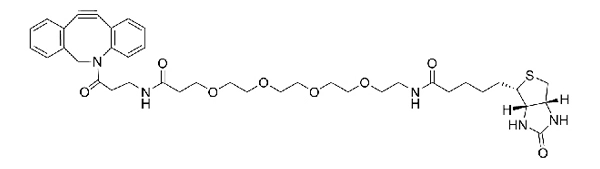
Biotin-PEG4-DBCO
A biotin probe for copper-free click chemistry reaction, Biotin-PEG4-DBCO reacts with azides to form a stable triazole and does not require Cu-catalyst or elevated temperatures. Often a reagent of choice in live cell surface glycans and lipids studies where the presence of cytotoxic copper catalyst is not acceptable. In application where the presence of copper is a concern Biotin-PEG4-DBCO is an ideal alternative to copper requiring biotin-alkynes.
Price range: $96.00 through $889.00
| SKU | Unit Size | Price |
|---|---|---|
Select a unit size:
How do I request a quote or bulk pricing?
Selected References
|