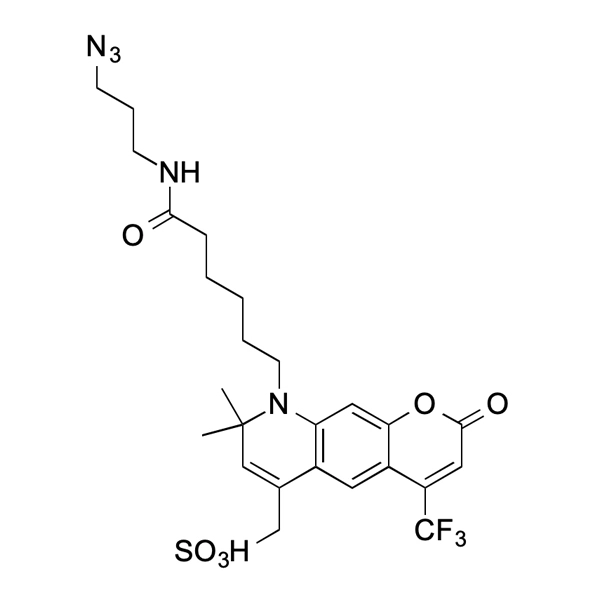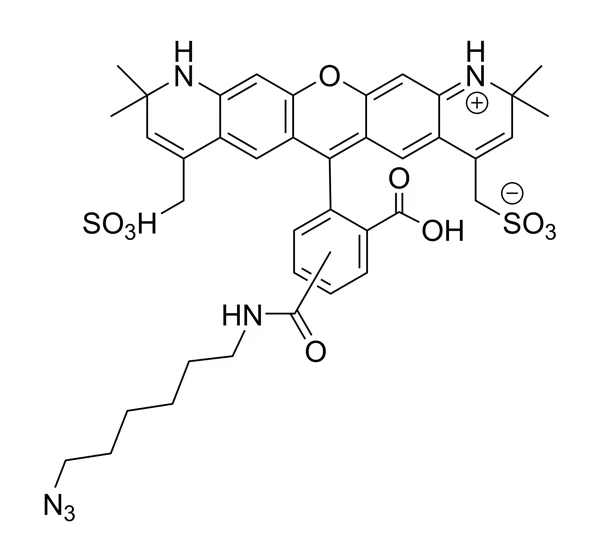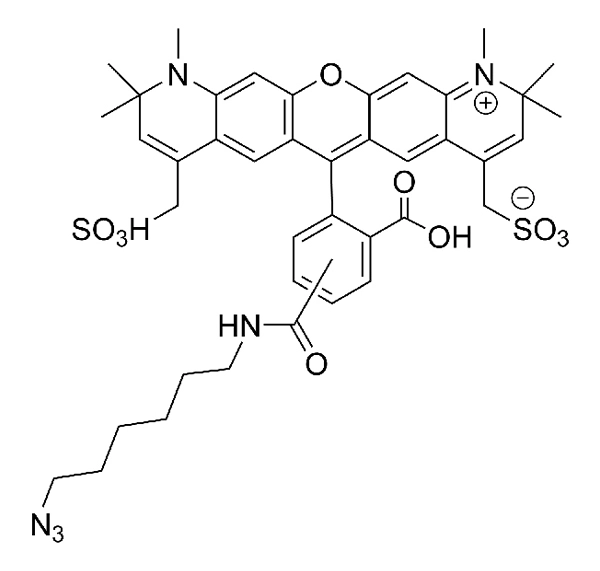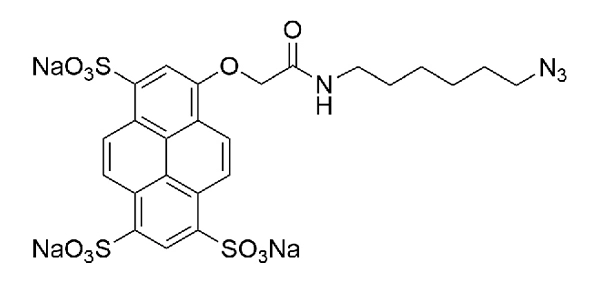
CAS Number N/A | |
Molecular Weight 736.69 (protonated) | |
Appearance Yellow solid | |
Extinction Coefficient 73 | |
Unit Size 1 mg, 5 mg, 25 mg | |
Solubility Water, DMSO, DMF | |
Storage Instructions -20°C. Desiccate | |
Spectrally Similar Dyes Fluorescein, Alexa Fluor® 488, CF® 488A, DyLight® 488, Atto™ 488 | |
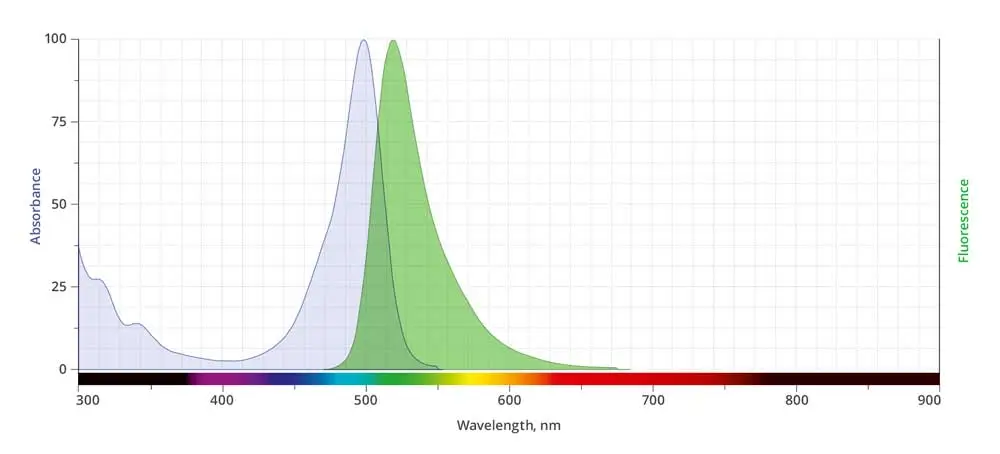
Excitation/Emission Maximum 494/517 nm | |
Shipping Conditions Ambient temperature | |
Shipping Instructions Ambient temperature |
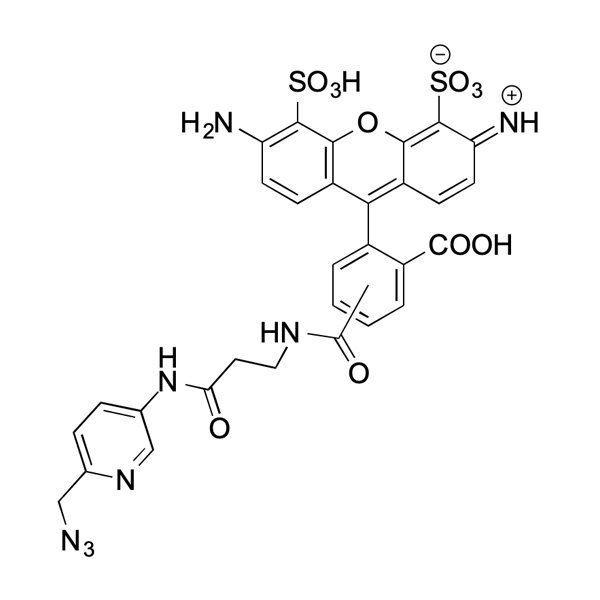
AZDye 488 Picolyl Azide
AZDye™ 488 Picolyl Azide is an advanced fluorescent probe that incorporates a copper-chelating motif to raise the effective concentration of Cu(I) at the reaction site to boost the efficiency of the CuAAC reaction, resulting in a faster and more biocompatible CuAAC labeling. Up to 40-fold increase of signal intensity, compared to conventional azides, was reported (see Selected References).
In addition, the use picolyl azides instead of conventional azides allows for at least a tenfold reduction in the concentration of the copper catalyst without sacrificing the efficiency of labeling, significantly improving biocompatibility of CuAAC labeling protocol.
In summary, the introduction of a copper-chelating motif into azide probe leads to a substantial increase in the sensitivity and reduced cell toxicity of CuAAC detection alkyne-tagged biomolecules. This will be of special value for the detection of low abundance targets or living system imaging.
AZDye™ 488 is structurally identical to Alexa Fluor® 488. Its absorption/emission spectra is a perfect match to spectra of many other fluorescent dyes based on sulfonated rhodamine 110 core, including DyLight® 488, Alexa Fluor® 488, and CF® 488A.
Price range: $209.00 through $1,961.00
| SKU | Unit Size | Price |
|---|---|---|
Select a unit size:
How do I request a quote or bulk pricing?
Abs/Em Spectra
|
Selected References
|