
A New Focus for Breast Cancer: Protein Glycosylation’s Emerging Role
In 2022, 2.3 million women worldwide were diagnosed with breast cancer, and breast cancer is the most common form of cancer in women in nearly 85% of countries [1]. Currently, breast cancer mortality is decreasing over time [2], but this depends on the type of cancer and how early the patient was diagnosed. To ensure the mortality rate of this disease continues to shrink, better diagnostics and therapeutic approaches are required that take into consideration all dimensions of disease, including protein glycosylation.
Human epidermal growth factor receptor 2 (HER2) is a heavily glycosylated receptor tyrosine kinase with multiple glycosylation sites that influence its structure, stability, and signaling activity. HER2 is the target of multiple antibody therapeutics, including trastuzumab (also known as Herceptin). Alterations in glycosylation of HER2 have been shown to impact the binding of trastuzumab [3], suggesting that glycosylation should be considered in therapeutic design and combination therapy development.
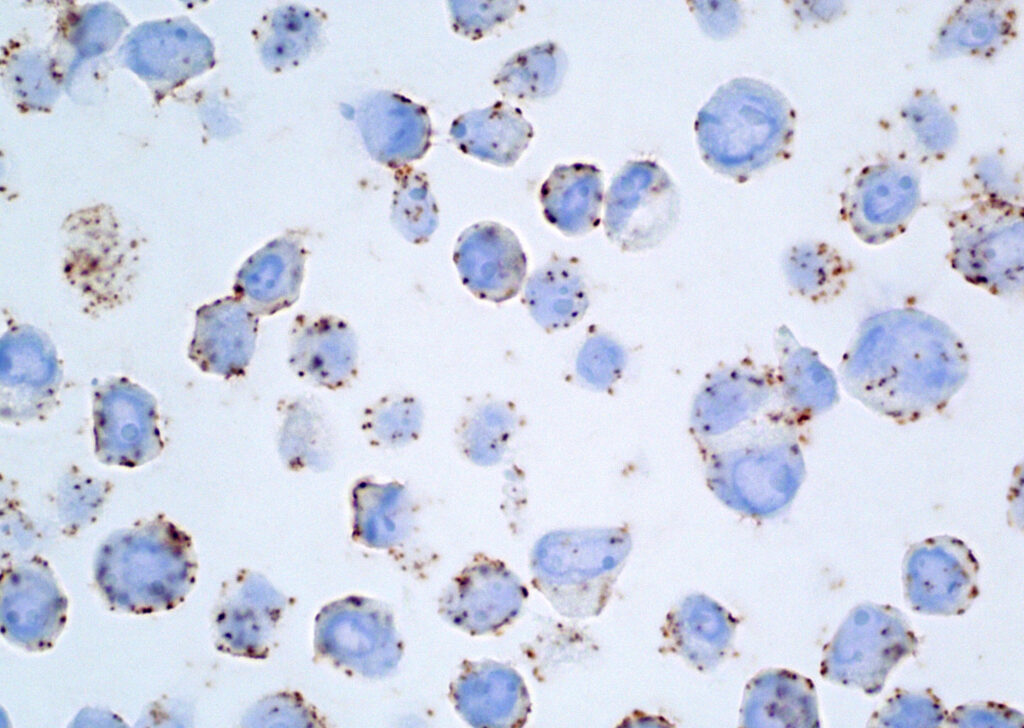
Using the Glysite Explorer™ in situ PLA Glycan Detection Kit in BT474 cell pellets, isPLA of anti-HER2 antibody and SNA lectin demonstrated extensive positive staining (Figure 1). This is evidence of proximity between the HER2 protein and sialic acid glycans, suggesting that protein-glycan interactions impact HER2 proteins. This data and the ability to use this assay in future studies enhance understanding of how glycosylation of the HER2 protein impacts breast cancer development and potential therapies. The Glysite Explorer Kit can be used for orthogonal validation of glycan-mediated targets in the development of antibody therapies.
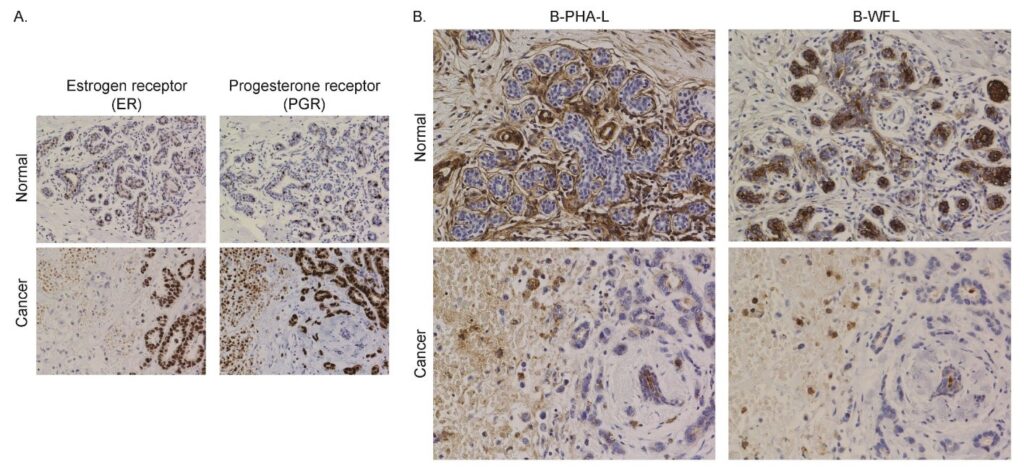
To further enable researchers to explore every facet of breast cancer immunotherapy and glycosylation of breast cancer-associated proteins, Vector Laboratories has developed a suite of glycobiology kits and reagents. The Glysite™ Scout Glycan Screening Kit is a fully integrated kit with a curated panel of lectins that can be used for the detection of potential glycosylation changes between normal and cancer tissues. Our poster “A New Journey for Cancer Research Glysite™ Scout Glycan Screening Kit for Comprehensive Detection of Glycan Expression” has more information on how Glysite Scout can be adapted for breast cancer research (Figure 2). Additionally, Vector Laboratories produces and purifies lectins for a variety of sugar-binding specificities, making these essential glycobiology tools accessible to researchers in a variety of formats and conjugations for flexibility.
Breast cancer is one of the most common forms of cancer worldwide and to uncover new diagnostics and therapeutic avenues for this disease requires probing all facets, including glycosylation. Vector Laboratories’ kits and reagents make studying this key post-translational modification more accessible. Explore our suite of glycobiology reagents and ensure you’re studying your target of interest through a comprehensive lens.
References
- World Health Organization. (2025, August 14). Breast cancer [Fact sheet]. https://www.who.int/news-room/fact-sheets/detail/breast-cancer
- American Cancer Society. (2025, May 5). How common is breast cancer? In Breast cancer — Key statistics. https://www.cancer.org/cancer/types/breast-cancer/about/how-common-is-breast-cancer.html
- Peiris, D., Spector, A., Lomax-Browne, H., et al. (2017). Cellular glycosylation affects Herceptin binding and sensitivity of breast cancer cells to doxorubicin and growth factors. Scientific Reports, 7, Article 43006. https://doi.org/10.1038/srep43006